
Coming home after a long time can feel emotional. Whether someone was away for work, travel, or something more personal, returning home is often a big moment. And saying the right thing in that moment? That matters more than we often think.
“Welcome back home” is a common way to greet someone who has returned. But sometimes, you want something warmer, simpler, or maybe a bit more personal. In this guide, we’ll walk through what “welcome back home” means, when to use it, and offer 19 better ways to say it. We’ll also show you simple ways to respond if someone says it to you.
Let’s get started.
What Does “Welcome Back Home” Mean?
The phrase “welcome back home” is a friendly greeting. It’s used when someone returns after being away for a while. It can be used for a few hours, days, or even years apart. It shows care and warmth.
This phrase blends two ideas:
- “Welcome back” = Acknowledging their return
- “Home” = Emphasizing the emotional or physical return to a familiar place
It’s often used with family members, friends, or close coworkers. The tone is friendly and supportive.
When and Where to Use “Welcome Back Home”
You can use “welcome back home” in many settings. Here are a few examples:
- When a friend comes back from vacation
- When a partner returns from a business trip
- When a college student comes home for the holidays
- After a long hospital stay
- When someone moves back after living elsewhere
Tone and timing matter. This phrase feels warm in spoken conversations. You can also use it in texts, notes, or social media posts.
But here’s the thing: if you use it too often, it might feel dry. That’s why it helps to mix things up. Let’s look at some other ways to say it.
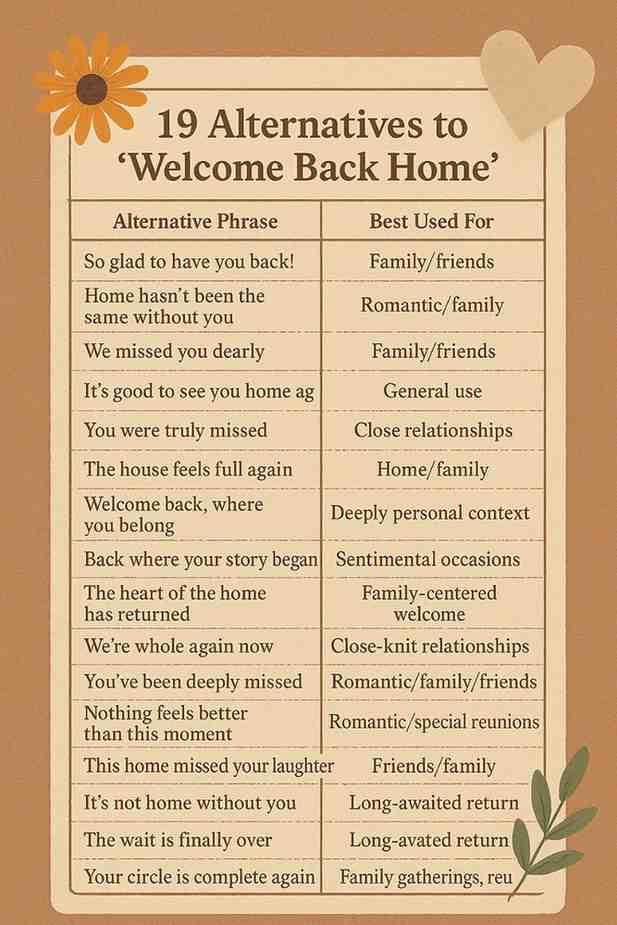
19 Alternatives to “Welcome Back Home”
Here are 19 options that feel more personal, warm, or unique. For each, we’ve broken it down:
1. Good to have you back
Meaning: Shows comfort in the person’s return
Explanation: Simple, friendly, and works in casual or formal settings
Example: “Hey! Good to have you back—it’s been quiet without you.”
Best Use: Office settings, friend circles, family get-togethers
2. You’ve been missed
Meaning: Expresses emotional absence
Explanation: Highlights their value during the time away
Example: “You’ve been missed around here.”
Best Use: Close relationships—family, partners, or longtime friends
3. Home isn’t the same without you
Meaning: Stresses how their absence changed things
Explanation: Warm and heartfelt
Example: “Welcome back! Home isn’t the same without you.”
Best Use: Family or partner reunions
4. Nice to see you again
Meaning: A neutral, friendly greeting
Explanation: Works in professional and social settings
Example: “Nice to see you again! How was your trip?”
Best Use: Co-workers, old friends, neighbors
5. Glad you’re back
Meaning: A simple way to show happiness
Explanation: Straight to the point
Example: “Glad you’re back—things weren’t the same.”
Best Use: General use—friendly but not too emotional
6. Feels good to have you home
Meaning: Emphasizes the shared relief or joy
Explanation: Slightly emotional, warm in tone
Example: “Feels good to have you home again.”
Best Use: Family settings, especially after long absences
7. Welcome home
Meaning: Even simpler than “welcome back home”
Explanation: Clean, classic, and full of meaning
Example: “Welcome home! We missed you.”
Best Use: Any time someone returns to their place
8. It’s been too long
Meaning: Points to the length of time apart
Explanation: Can carry warmth or regret
Example: “Wow—it’s been too long. Welcome back.”
Best Use: Reuniting with old friends or distant family
9. Back where you belong
Meaning: Affirms the return as natural or right
Explanation: Carries warmth and belonging
Example: “You’re back where you belong.”
Best Use: Deep friendships or family bonds
10. The house feels whole again
Meaning: Symbolizes emotional completeness
Explanation: Creative and sentimental
Example: “Now that you’re back, the house feels whole again.”
Best Use: Family use—especially parents or partners
11. We missed your energy
Meaning: Compliments their presence
Explanation: Shows they brought life to the space
Example: “Glad you’re home. We missed your energy.”
Best Use: Team settings or upbeat households
12. Our star is back
Meaning: Playful and complimentary
Explanation: Adds a sense of fun
Example: “Look who’s here! Our star is back.”
Best Use: Close friends, kids, or office teams
13. Welcome to your nest
Meaning: Emphasizes comfort and safety
Explanation: “Nest” creates a warm image of home
Example: “Hey sleepyhead, welcome to your nest.”
Best Use: Romantic or family tone, casual vibe
14. Your room missed you
Meaning: Playful, indirect way of showing care
Explanation: Uses space to show attachment
Example: “Your room missed you—go see it.”
Best Use: Parents greeting kids, close family
15. Look who’s back!
Meaning: Casual surprise
Explanation: Often followed by a hug or smile
Example: “Look who’s back! Thought you’d moved in abroad.”
Best Use: Informal greetings with friends or relatives
16. It’s about time
Meaning: Slight teasing for the long wait
Explanation: Friendly sarcasm, still warm
Example: “It’s about time you came back!”
Best Use: Best friends, siblings, light humor
17. Finally!
Meaning: One-word expression of relief
Explanation: Direct and emotional
Example: “Finally! I’ve been waiting for you.”
Best Use: Partners, close friends, long-distance reunions
18. This place needed you
Meaning: Emphasizes their value
Explanation: Poetic and kind
Example: “Welcome back. This place needed you.”
Best Use: Emotional or motivational greetings
19. We’re whole again
Meaning: Suggests emotional or family unity
Explanation: Strong emotional impact
Example: “Now that you’re back, we’re whole again.”
Best Use: Deep family or partner moments
Simple and Polite Responses to “Welcome Back Home”
When someone says “welcome back home,” you might wonder how to respond. The key? Keep it simple, heartfelt, and sincere.
Here are a few go-to responses:
- “Thanks, it’s good to be back.”
- “I missed this place.”
- “Feels great to be home again.”
- “Thanks! I really needed this.”
- “Appreciate it—I’ve missed everyone here.”
- “So happy to be back. Thanks for the warm welcome.”
Match the tone to the person you’re talking to. If it’s a friend, feel free to be casual. If it’s your boss or coworker, keep it polite but positive.
Conclusion
“Welcome back home” is more than just a greeting—it’s a way to show care, connection, and emotion. But sometimes, switching up the phrase can say even more.
Whether you want to keep it simple, be a bit funny, or go deep with emotion, there’s always a better way to say it. And now, you’ve got 19 solid choices to pull from.
So next time someone walks through that door, say something that sticks.