
We often say “I wish you all the best” when someone is starting a new job, leaving a role, or going through life changes. It’s simple, kind, and respectful. But after a while, it can sound a bit too common or even impersonal—especially in professional settings. If you’re looking for ways to say something similar without repeating the same phrase, you’re in the right place.
Let’s explore the meaning, usage, and professional alternatives to this well-known phrase.
What Does “I Wish You All the Best” Mean?
The phrase is a friendly way of showing support. You’re letting someone know you hope things go well for them. It’s usually used when parting ways or marking a new chapter in someone’s life.
It’s polite, optimistic, and encouraging—which is why it’s so popular. But because it’s used so often, it may feel less personal or even vague.
When and Where to Use “I Wish You All the Best”
This phrase fits many occasions. Here are a few common ones:
- A coworker is leaving for another job
- A client is ending a contract
- A friend is moving away
- Someone is graduating or retiring
- Someone is recovering from an illness
You can use it in emails, cards, or even in person. It’s safe and polite, especially if you don’t know the person very well. But if you’re writing something more personal or professional, you might want a phrase that sounds more thoughtful or tailored.
Also Read – I Hope You Had a Great Weekend: Meaning, Usage, and Better Alternatives
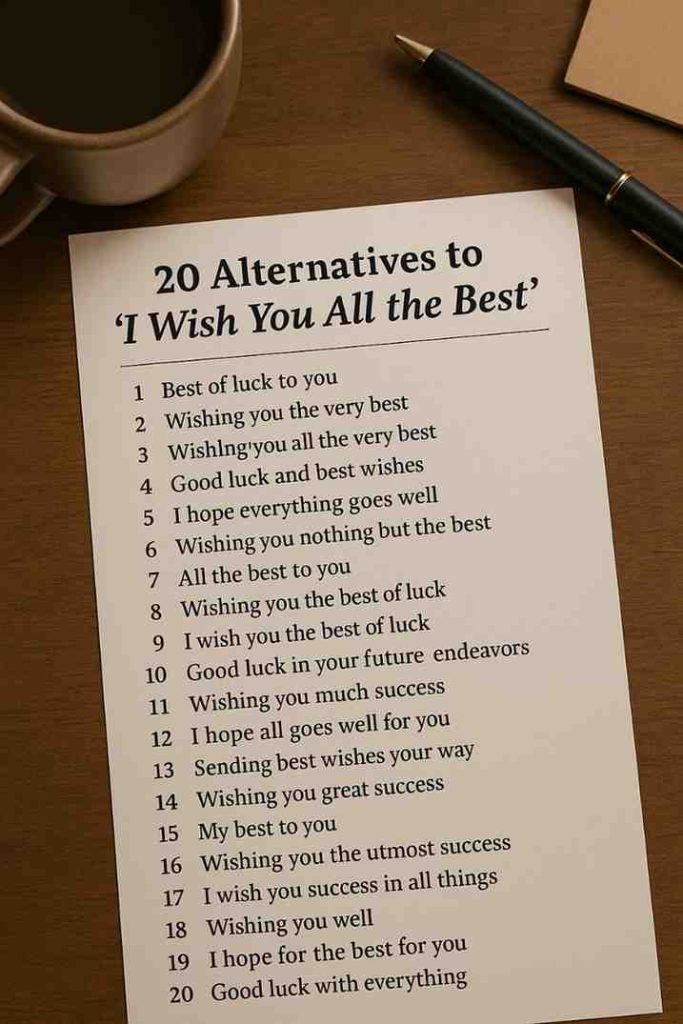
20 Professional Alternatives to “I Wish You All the Best”
Here are polished ways to say the same thing with more variety. Each one comes with meaning, explanation, example, and ideal usage.
1. Best Wishes
Meaning: A polite way to express goodwill.
Explanation: Simple and timeless. Often used in formal emails or letters.
Example: Best wishes for your next adventure.
Best Use: Office goodbyes, client farewells.
2. Warm Regards
Meaning: A formal but warm closing.
Explanation: Adds a personal touch while keeping it professional.
Example: Warm regards and good luck with your new role.
Best Use: Email sign-offs, farewell notes.
3. All the Best in Your Future Endeavors
Meaning: You’re wishing someone well in what they do next.
Explanation: Common in corporate settings.
Example: All the best in your future endeavors. It’s been a pleasure working with you.
Best Use: Resignation emails, professional transitions.
4. Here’s to Your Next Chapter
Meaning: A nod to new beginnings.
Explanation: Positive and supportive.
Example: Here’s to your next chapter—I know you’ll do great things.
Best Use: Career moves, retirement.
5. Good Luck
Meaning: Wishing someone success.
Explanation: Short and sweet.
Example: Good luck in your new role!
Best Use: Colleague farewells, job changes.
6. Much Success Ahead
Meaning: You’re hoping they do well.
Explanation: Sounds formal yet kind.
Example: Wishing you much success ahead.
Best Use: Career transitions, promotions.
7. Congratulations and Good Wishes
Meaning: You’re celebrating their milestone.
Explanation: Ideal when someone has achieved something.
Example: Congratulations and good wishes on your promotion.
Best Use: Promotions, graduations.
8. I’m Cheering You On
Meaning: You’re supporting them from afar.
Explanation: Encouraging and personal.
Example: I’m cheering you on from the sidelines!
Best Use: Personal or casual messages.
9. Take Care and Stay in Touch
Meaning: You want to keep in contact.
Explanation: Friendly and forward-looking.
Example: Take care and stay in touch—let’s grab coffee soon.
Best Use: When leaving a job or ending a client project.
10. I Hope Our Paths Cross Again
Meaning: You want to see them again.
Explanation: Warm and hopeful.
Example: I hope our paths cross again someday.
Best Use: Farewells where future collaboration is possible.
11. Keep in Touch
Meaning: Encouraging continued connection.
Explanation: Simple and friendly.
Example: Keep in touch—I’d love to hear how it goes.
Best Use: Networking emails, old colleagues.
12. I’m Wishing You Continued Success
Meaning: You’re hoping they keep succeeding.
Explanation: Forward-thinking and respectful.
Example: I’m wishing you continued success in your new position.
Best Use: Former coworkers, client hand-offs.
13. Sending You Positive Vibes
Meaning: You’re wishing them well in a casual way.
Explanation: Informal and upbeat.
Example: Sending you positive vibes as you start this journey.
Best Use: Friendly or casual notes.
14. It’s Been a Pleasure
Meaning: You’ve enjoyed your time with them.
Explanation: Appreciative and polite.
Example: It’s been a pleasure working with you.
Best Use: Goodbye notes, resignations.
15. Onward and Upward
Meaning: Wishing them growth.
Explanation: Energetic and motivating.
Example: Onward and upward—you’ve got this!
Best Use: Career moves, promotions.
16. Keep Striving
Meaning: Encouraging them to keep pushing forward.
Explanation: Inspiring and simple.
Example: Keep striving—your hard work will pay off.
Best Use: Mentorship, career support.
17. You’re Going to Do Great
Meaning: Expressing strong belief in them.
Explanation: Warm and confident.
Example: You’re going to do great in your new role!
Best Use: Friendly farewells.
18. Looking Forward to Seeing What You Do Next
Meaning: You’re excited for their future.
Explanation: Encouraging and forward-looking.
Example: Looking forward to seeing what you do next—you’re full of talent.
Best Use: Colleagues, creative professionals.
19. Stay Awesome
Meaning: A light, fun way to say goodbye.
Explanation: Informal and upbeat.
Example: Stay awesome and keep doing great things.
Best Use: Close coworkers or friends.
20. I’ll Miss Working With You
Meaning: Expressing genuine sentiment.
Explanation: Honest and personal.
Example: I’ll miss working with you—thanks for everything.
Best Use: Team members, close colleagues.
Simple and Polite Responses to “I Wish You All the Best”
When someone tells you, “I wish you all the best,” here are a few kind replies you can use:
- Thank you, that means a lot.
- I appreciate it. Wishing you the same.
- Thanks! It’s been great working with you.
- Thank you so much—best wishes to you as well.
- I really appreciate your support.
Keep your reply polite and sincere. Whether it’s in person or over email, a kind word goes a long way.
Conclusion
“I wish you all the best” is a kind and respectful phrase. But if you want to stand out or make your message more personal, try using one of the alternatives above. They’re simple, clear, and better suited for many modern professional settings.
A thoughtful goodbye or well-wish doesn’t have to be complicated. Just honest, warm, and fitting for the moment. That’s what people remember most.