Helping others is a big part of building trust and strong relationships. Whether in business, customer service, or everyday life, how you respond when someone thanks you matters. One phrase that often comes up is “It’s my pleasure to help.”
It’s polite, warm, and shows you enjoy helping. But sometimes you might want different words. Maybe you want to sound more casual. Maybe you need something more formal. Or maybe you want to keep things fresh instead of repeating the same phrase.
This guide explains what “It’s my pleasure to help” means, when to use it, and 20 alternatives you can try. You’ll also learn how to respond when someone says it to you.
What Does “It’s My Pleasure to Help” Mean?
The phrase means you are happy to give your time or effort to someone. It tells the other person that helping them was not a burden. It can make them feel comfortable asking for help again in the future.
It’s often used in professional settings, especially in customer service. But it can also work in personal conversations. The key message is that you see helping as a positive experience, not an obligation.
When and Where to Use “It’s My Pleasure to Help”
You can use this phrase in many situations:
- Customer service – When a client thanks you for solving a problem.
- Workplace teamwork – When a colleague thanks you for your support.
- Friends and family – When someone appreciates your help with a personal matter.
- Email replies – To end a message on a positive note.
- Networking events – To leave a professional, friendly impression.
It works well when you want to show that helping is part of who you are, not just something you had to do.
Also Read – “How Was Your Day” – Meaning, Use, and Alternatives
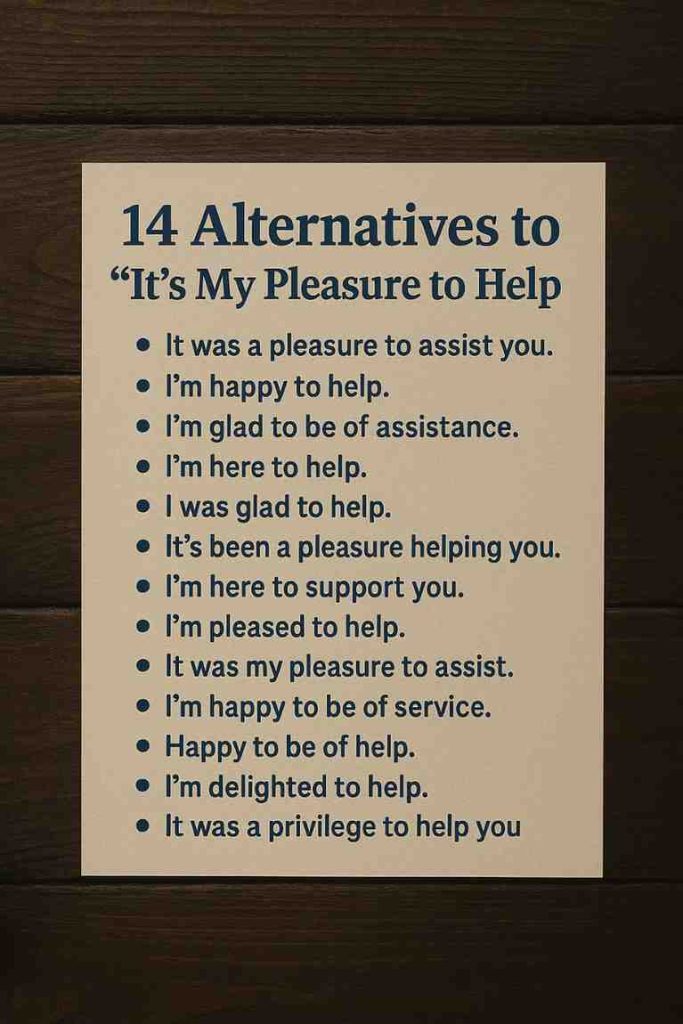
20 Alternatives to “It’s My Pleasure to Help”
1. “Happy to help.”
Meaning: I’m glad I could assist you.
Explanation: Short and friendly. Good for casual and professional settings.
Scenario Example: “Happy to help. Let me know if you need anything else.”
Tone: Warm and approachable.
2. “Anytime.”
Meaning: You can count on me whenever you need help.
Explanation: Works well for ongoing relationships.
Scenario Example: “Anytime—you know where to find me.”
Tone: Friendly and open.
3. “You’re welcome.”
Meaning: A polite way to respond to thanks.
Explanation: Classic and simple. Fits any situation.
Scenario Example: “You’re welcome. I’m glad it worked out.”
Tone: Neutral and polite.
4. “Glad I could help.”
Meaning: I’m happy I was able to assist.
Explanation: Shows satisfaction in being helpful.
Scenario Example: “Glad I could help. Best of luck with your project.”
Tone: Warm and supportive.
5. “Of course.”
Meaning: It was natural for me to help.
Explanation: Implies no hesitation.
Scenario Example: “Of course. I’m here if you need more help.”
Tone: Friendly and easygoing.
6. “No problem at all.”
Meaning: Helping was easy and not an issue.
Explanation: Keeps things casual and light.
Scenario Example: “No problem at all—it was my pleasure.”
Tone: Relaxed and informal.
7. “That’s what I’m here for.”
Meaning: Helping is part of my role or purpose.
Explanation: Works well in customer service or work settings.
Scenario Example: “That’s what I’m here for. Let me know if you need anything else.”
Tone: Professional and reassuring.
8. “Always happy to help.”
Meaning: I’m always ready to offer support.
Explanation: Adds a friendly and ongoing commitment.
Scenario Example: “Always happy to help—don’t hesitate to ask.”
Tone: Warm and inviting.
9. “It’s no trouble.”
Meaning: Helping was not an inconvenience.
Explanation: Removes any sense of burden.
Scenario Example: “It’s no trouble at all—glad I could assist.”
Tone: Polite and reassuring.
10. “It’s nothing.”
Meaning: Helping was small or easy for me.
Explanation: Keeps the focus on the other person, not your effort.
Scenario Example: “It’s nothing—glad it worked out.”
Tone: Humble and casual.
11. “Don’t mention it.”
Meaning: You don’t need to thank me.
Explanation: Common in casual speech.
Scenario Example: “Don’t mention it—it’s all good.”
Tone: Relaxed and informal.
12. “I’m here to help.”
Meaning: My purpose is to assist.
Explanation: Works in both formal and casual contexts.
Scenario Example: “I’m here to help whenever you need me.”
Tone: Supportive and clear.
13. “It’s the least I could do.”
Meaning: My help was small compared to what you deserve.
Explanation: Adds humility and kindness.
Scenario Example: “It’s the least I could do after all you’ve done for me.”
Tone: Warm and grateful.
14. “My pleasure.”
Meaning: I enjoyed helping.
Explanation: A shorter form of the original phrase.
Scenario Example: “My pleasure. Let me know if you need anything else.”
Tone: Polite and friendly.
15. “I’m glad it helped.”
Meaning: I’m happy the help made a difference.
Explanation: Good follow-up when you see positive results.
Scenario Example: “I’m glad it helped. Keep me updated.”
Tone: Encouraging and warm.
16. “That’s all part of the job.”
Meaning: Helping is part of my role.
Explanation: Works well in service or work contexts.
Scenario Example: “That’s all part of the job—happy to help anytime.”
Tone: Professional and polite.
17. “You’ve got it.”
Meaning: Consider it done.
Explanation: Quick and upbeat. Good for casual interactions.
Scenario Example: “You’ve got it—let me know if you need more.”
Tone: Energetic and informal.
18. “Sure thing.”
Meaning: I’m willing to help without hesitation.
Explanation: Light and friendly, often used in casual settings.
Scenario Example: “Sure thing—glad to help.”
Tone: Casual and easygoing.
19. “Not at all.”
Meaning: It was no problem helping you.
Explanation: A polite response often used in formal contexts.
Scenario Example: “Not at all. I’m glad you’re satisfied.”
Tone: Formal and courteous.
20. “It’s all good.”
Meaning: No need to thank me, everything is fine.
Explanation: Casual and laid-back.
Scenario Example: “It’s all good—happy to help.”
Tone: Relaxed and informal.
Also Read – “Nice Seeing You Again” – Meaning, Use, and Alternatives
How to Respond When Someone Says “It’s My Pleasure to Help”
When someone says this to you, they’re telling you they were happy to help. Your reply can be short and warm. You don’t need to overcomplicate it.
Some simple responses:
- “Thank you, I appreciate it.”
- “That means a lot.”
- “Thanks again for your help.”
- “I’m grateful for your time.”
- “You’ve been a big help.”
You can also add a personal touch:
“Thank you, I couldn’t have done it without you.”
The main thing is to acknowledge their effort and sincerity.
Conclusion
“It’s my pleasure to help” is a kind, polite phrase that works in many situations. It’s common in both personal and professional settings. Still, having alternatives helps you sound fresh and adapt your tone to different people.
The 20 alternatives above give you a wide range—from formal to casual, from short replies to warm, ongoing offers of help. Use them to fit the relationship and situation.
No matter which words you choose, make sure your tone is genuine. People remember sincerity far more than exact phrasing.