In the world of texting, social media, and online chats, abbreviations are widely used to communicate faster. One such popular abbreviation is “FWB,” which stands for “Friends with Benefits.” In this article, we will explore the full meaning of “FWB,” its origins, when and how to use it, as well as alternatives that can help convey similar concepts with clarity and respect.
What Does “FWB” Mean?
“FWB” stands for “Friends with Benefits.” It refers to a relationship between two people who are friends, but with the addition of a sexual or romantic component, without the expectation of a committed romantic relationship. This arrangement is typically understood to be casual, with both individuals enjoying the benefits of a physical connection without the responsibilities of a traditional romantic relationship.
For example, a person might say, “We’re FWB,” to indicate that they have a physical connection with someone, but they are not in a committed relationship. It’s important to note that the term often implies mutual understanding and consent, with both parties being aware of and accepting the nature of the relationship.
FWB Full Form on Social Media Platforms
On social media platforms like Instagram, Twitter, Facebook, and Snapchat, “FWB” is often used to describe a non-committed romantic or sexual relationship. It’s popular among young people and those who prefer casual interactions over serious commitments.
Here’s how “FWB” typically appears across different platforms:
- Instagram: People might post something like, “Hanging out with my FWB tonight!” to indicate a casual, fun relationship with someone.
- Twitter: A tweet could say, “FWB vibes only this weekend” to show they are having a carefree, non-committed interaction.
- Facebook: While less common on Facebook, some people use “FWB” in private messages or status updates when describing a non-exclusive relationship.
- Snapchat: Users on Snapchat may use “FWB” in streaks or in direct messages to describe casual relationships.
The term has grown in popularity in digital communication as people look for shorthand ways to describe personal relationships.
The Origin and History of the Phrase
The term “Friends with Benefits” has been around for several decades, but it gained significant attention in popular culture in the 2000s. The exact origin of the phrase is hard to pinpoint, but it is believed to have evolved from a long history of casual and non-committed relationships that have been a part of human interaction for centuries.
However, the phrase really took off when it became the title of a 2011 Hollywood romantic comedy starring Mila Kunis and Justin Timberlake. The film highlighted the challenges and complications of being friends with someone while maintaining a purely physical connection. This movie made the concept more mainstream and widely known, especially among younger generations.
The term “FWB” has become synonymous with casual relationships in modern dating culture, and it is often used as a way to avoid the seriousness or commitment that traditional relationships often involve.
When & Where to Use “FWB”
“FWB” is typically used in informal settings and is most appropriate in casual conversations or texts between people who are familiar with each other. It’s used to indicate a non-committed romantic or sexual relationship where both individuals share an understanding of the arrangement.
Where to Use “FWB”:
- Social Media Posts: You can use “FWB” to describe your relationship status or experiences on social media platforms, such as Instagram, Snapchat, or Twitter.
- Text Messaging: When texting with a friend or someone you are in a casual relationship with, “FWB” is a shorthand way to convey the nature of your relationship.
- Online Dating Apps: On dating apps like Tinder or Bumble, you may find profiles with “FWB” to indicate that the user is looking for a casual connection rather than a committed romantic relationship.
When Not to Use “FWB”:
- Formal Settings: Avoid using “FWB” in formal or professional situations where the nature of relationships should remain respectful and neutral.
- Family Conversations: It’s not suitable to discuss “FWB” in family gatherings or conversations, as it can be considered inappropriate or uncomfortable.
- Romantic Relationships: If you are in a committed romantic relationship, it’s important to have open discussions with your partner about boundaries and expectations. Using “FWB” could create misunderstandings or hurt feelings.
In summary, “FWB” should only be used in situations where both parties understand and agree on the casual nature of the relationship. It’s essential to maintain respect and transparency when using this term.
Discover More: What Does “LFG” Mean in Texts, TikTok and Alternatives
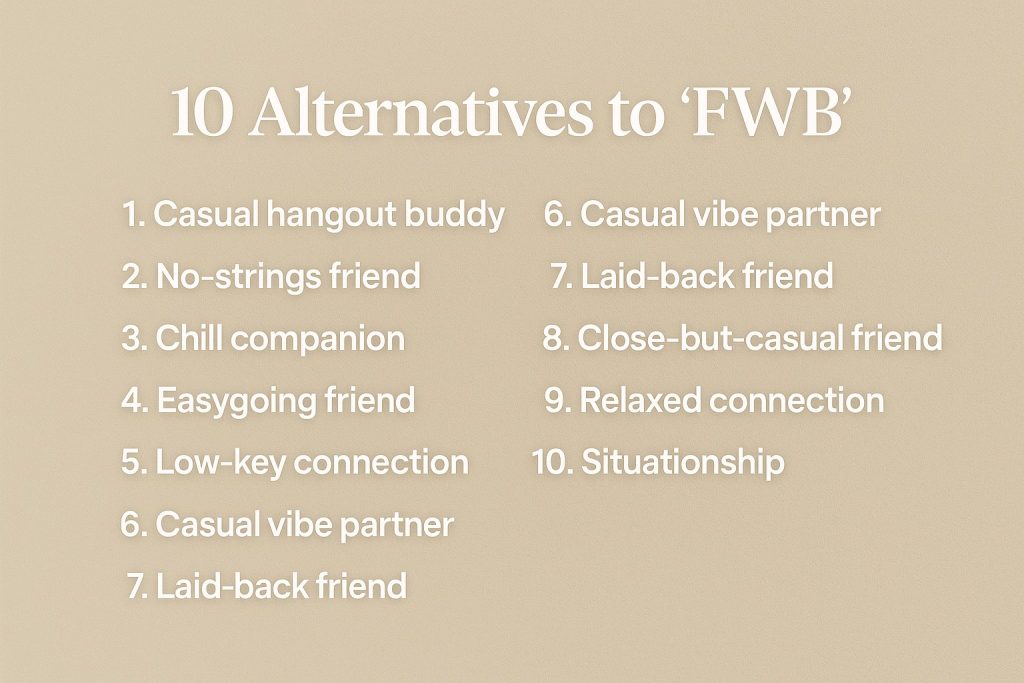
10 Alternatives to “FWB”
While “FWB” is widely used, there are several other ways to describe a similar type of relationship. Here are some alternatives that can convey the same concept:
Meaning:
These alternatives express the idea of a casual relationship without the commitment of a traditional romantic bond.
Explanation:
Each of these alternatives can be used in different contexts depending on how formal or informal you want the communication to be:
- Casual Dating: Refers to two people who are dating without serious commitment. It’s broader than “FWB” and can include occasional dates, but no long-term commitment.
- No Strings Attached (NSA): This term indicates a relationship where there is no expectation of a romantic commitment, just physical interaction.
- Hookup: This term is often used to describe a brief, one-time or recurring sexual encounter without any emotional involvement.
- Situationship: A more modern term that refers to a romantic or sexual relationship that lacks commitment or clear definition.
- Companionship: Refers to a relationship in which people spend time together and enjoy each other’s company, but without romantic attachment.
- Platonic with Benefits: This variation of “FWB” can be used when a person wants to emphasize that the relationship is based on friendship but includes physical intimacy.
- Lovers Without Labels: This term is used when two people are romantically or sexually involved but have not committed to labels like “girlfriend” or “boyfriend.”
- Friends with Perks: This is a playful variation of “FWB,” emphasizing the enjoyable aspects of the arrangement while keeping things casual.
- Casual Friends: Another term for people who have a friendly, non-committed relationship that includes physical attraction or intimacy without any long-term expectations.
- Occasional Lovers: This term suggests a less frequent relationship that is strictly physical and not based on emotional attachment.
Example:
- FWB: “I’ve been seeing someone casually; we’re just FWB.”
- Casual Dating: “We’re casually dating, no strings attached.”
- NSA: “Looking for an NSA situation, just having fun together.”
- Hookup: “We hooked up last weekend, but there’s nothing serious between us.”
- Situationship: “We’re in a situationship right now, no titles or commitments.”
- Companionship: “We enjoy each other’s company, but it’s not a relationship.”
- Platonic with Benefits: “We’re friends with benefits, but it’s all casual.”
- Lovers Without Labels: “We’re lovers without labels, enjoying each other’s company without the commitment.”
- Friends with Perks: “We’re just friends with perks—good times and good company.”
- Occasional Lovers: “We’re occasional lovers, meeting up when it’s convenient.”
Best Use:
- Casual Dating: Best used when you are seeing someone without any long-term expectations.
- No Strings Attached (NSA): Ideal for situations where the relationship is purely physical with no emotional strings.
- Situationship: Suitable for relationships that have a romantic or sexual aspect but lack definition or commitment.
- Companionship: Great when the focus is on enjoying time together without romantic attachment.
- Friends with Perks: Use this if you want to describe a friendship that includes physical intimacy but no emotional attachment.
Simple and Polite Responses to “FWB”
When discussing “FWB” or responding to someone who has mentioned it, it’s important to keep the conversation respectful and clear. Here are some simple, polite responses you can use:
- “I understand, thanks for being clear about that.”
- A respectful acknowledgment that shows you understand the nature of the relationship.
- “That works for me, as long as we’re both on the same page.”
- This shows that you’re open to the arrangement, but you value mutual understanding.
- “I respect your honesty, and I’m good with it.”
- A positive response that acknowledges their openness without judgment.
- “Let’s make sure we’re both comfortable with this.”
- A response that emphasizes the importance of mutual respect and comfort in the arrangement.
- “Thanks for clarifying. I’m on board.”
- A straightforward way of expressing that you’re comfortable with the situation.
These responses ensure that the conversation remains polite and open, while maintaining clear communication and respect for both parties’ feelings.
Conclusion
“FWB” has become a common term used to describe casual, non-committed relationships in modern dating culture. It’s important to understand the meaning and implications of this phrase, especially in digital conversations and social media interactions. While “FWB” is widely accepted in casual settings, it’s crucial to use the term responsibly and with mutual understanding.
When using “FWB” or similar terms, always ensure that both parties are on the same page about the relationship’s nature. There are several alternatives to “FWB” that can be used depending on the context, and each term can help clarify the specific nature of the relationship.
Ultimately, whether you’re in a casual situation or simply communicating your relationship status, clarity and respect are key. Use these terms thoughtfully, and always be open and honest with the people you are involved with.